Playwright vs Selenium: Choosing the Right Tool for Test Automation
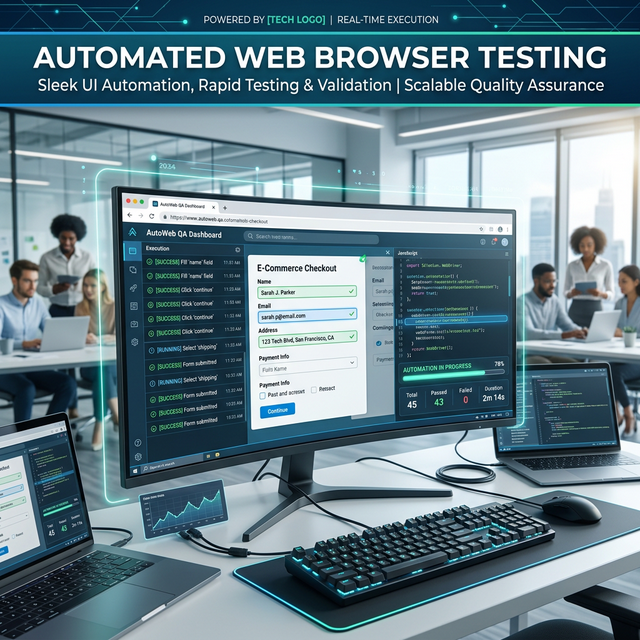
Test automation plays a critical role in modern software development. As applications become more complex and release cycles become shorter, selecting the right automation tool is essential for maintaining quality and efficiency.
Two of the most popular automation frameworks today are Playwright and Selenium. Both tools are widely used for browser automation, but they differ in architecture, capabilities, and ease of use.
In this article, we will compare Playwright and Selenium to help you choose the right tool for your project.
Overview of Selenium
Selenium is one of the oldest and most widely adopted web automation frameworks. It supports multiple programming languages, including:
- Java
- Python
- C#
- JavaScript
Selenium works by controlling browsers through WebDriver APIs, allowing testers to simulate user actions such as clicking buttons, filling forms, and navigating between pages.
Advantages of Selenium
- Mature and stable ecosystem
- Large community support
- Extensive documentation
- Integration with most CI/CD tools
- Supports multiple browsers and operating systems
Limitations of Selenium
- Requires separate WebDriver setup
- Slower execution compared to modern tools
- More maintenance effort for dynamic applications
- Complex setup for beginners
Overview of Playwright
Playwright is a modern automation framework developed by Microsoft. It was designed to overcome some limitations of older automation tools and provide better reliability and speed.
Playwright supports:
- JavaScript / TypeScript
- Python
- Java
- .NET
Unlike Selenium, Playwright communicates directly with browsers using modern browser protocols, eliminating the need for separate drivers.
Advantages of Playwright
- Faster execution
- Auto-waiting for elements
- Built-in network interception
- Supports multiple browser contexts
- Powerful debugging tools
Limitations of Playwright
- Smaller community compared to Selenium
- Relatively newer ecosystem
- Limited support for very old browsers
Key Differences Between Playwright and Selenium
1. Setup and Installation
Selenium requires:
- Browser drivers (ChromeDriver, GeckoDriver, etc.)
- Configuration setup
Playwright:
- Installs required browsers automatically
- Simple initialization process
Playwright generally provides a smoother onboarding experience.
2. Speed and Performance
Playwright typically runs faster due to:
- Direct browser communication
- Built-in smart waiting mechanisms
Selenium relies on explicit and implicit waits, which can slow down execution if not properly managed.
3. Handling Modern Web Applications
Modern applications use:
- Dynamic content
- Single Page Applications (SPA)
- Heavy JavaScript frameworks
Playwright handles dynamic elements more effectively because it automatically waits for elements to be ready before interacting with them.
Selenium can handle dynamic applications, but it often requires additional configuration and custom waits.
4. Parallel Testing
Playwright supports:
- Multiple browser contexts in a single instance
- Faster parallel execution
Selenium supports parallel testing but usually requires additional configuration using tools like Selenium Grid.
5. Cross-Browser Support
Selenium supports:
- Chrome
- Firefox
- Safari
- Edge
- Older browser versions
Playwright supports:
- Chromium
- Firefox
- WebKit
If you need extensive legacy browser support, Selenium may be the better option.
When to Choose Which?
Choose Selenium if:
- You need support for older browsers
- Your team already has Selenium expertise
- You are working in a large enterprise environment
- You require a mature, time-tested solution
Choose Playwright if:
- You are building a modern web application
- You want faster execution
- You prefer minimal setup
- You need advanced debugging and tracing features
Future Outlook
Automation frameworks continue to evolve. While Selenium remains widely used due to its maturity and ecosystem, Playwright is rapidly gaining popularity for its performance and modern architecture.
Organizations today often evaluate:
- Project complexity
- Team skill set
- Browser requirements
- Long-term maintenance cost
"There is no universal “best” tool — only the best tool for your specific use case."
Conclusion
Both Playwright and Selenium are powerful automation frameworks capable of handling complex web testing scenarios. Selenium offers maturity, flexibility, and broad browser support, while Playwright provides speed, reliability, and modern features.
Choosing the right tool depends on your project requirements, team expertise, and long-term goals. By understanding the strengths and limitations of each framework, teams can make informed decisions that improve testing efficiency and product quality.